About Us
Neighbors Preserving a Shore Town's Past
The Harvey Cedars Historical Society exists so that the stories of this small bayside and oceanfront community are collected, protected, and shared — for the people who live here now, and for those who come after.
Our Mission
Celebrating a Storied Heritage
The mission of the Harvey Cedars Historical Society is to collect, preserve, and share the history of Harvey Cedars through artifacts, exhibits, and the operation of the Harvey Cedars Museum — ensuring that the story of our community, past and present, is preserved for future generations.
We're a volunteer-driven, all-volunteer 501(c)(3) nonprofit, powered by residents, longtime summer families, and anyone who loves this stretch of Long Beach Island enough to want its history kept safe.
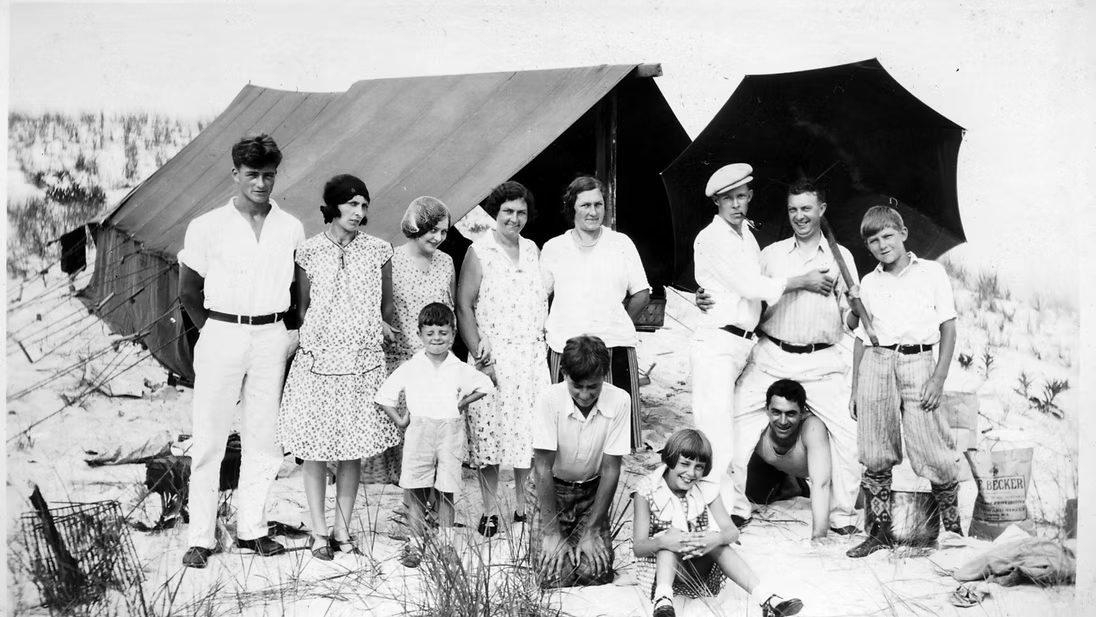
A Brief History of Harvey Cedars
From Harvest Quarters to Home
Pre-1600s
The Lenape
The Lenape people inhabited this stretch of the Jersey Shore for hundreds of years before European settlers arrived.
Mid-1600s–1830s
The Whaling Era
Men came north from Cape May and south from New England to hunt the migrating North Atlantic 'right' whale, spotting them each February and March from a 30-foot dune-top lookout nicknamed the 'owl's tree.' Overhunting ended the industry by the 1830s.
1700s
Salt Hay Harvesting
Settlers from Barnegat and neighboring bayside communities sailed across the bay to harvest salt hay — used for feeding livestock, mulching, papermaking, packing shipped game, and even as a base layer under gravel roads.
1751
“Harvest Quarters”
The earliest recorded land deed describes the area as 'a hammock and clump of cedars called Harvest Quarters.' Over time, 'harvest cedars' wore down to 'harves,' and then to 'Harvey' — the true origin of the town's name.
1850–1930s
Known as “High Point”
The town's first post office opened in 1850 under the name High Point, for its slightly elevated terrain. In the early 1930s, the U.S. Postal Service asked the town to adopt 'Harvey Cedars' to stop mail mix-ups with a similarly named township elsewhere in New Jersey. The local volunteer fire company still carries the High Point name.
December 11, 1894
Incorporation
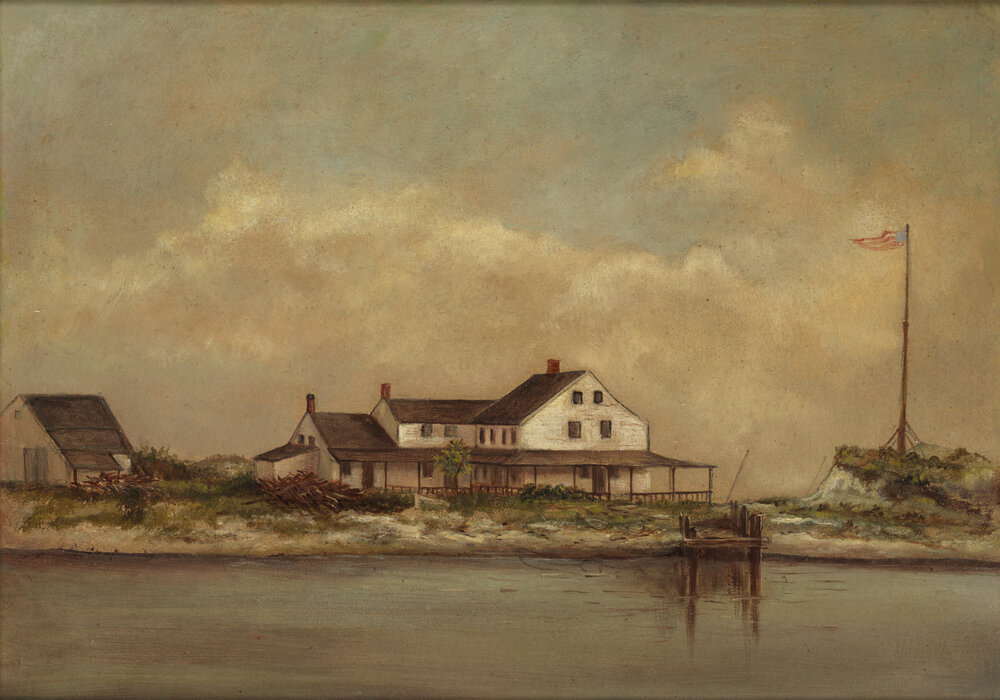
Harvey Cedars formally incorporated as a borough, separating from Union Township. Hotel owner Capt. Isaac Jennings became its first mayor.
1944 & 1962
Storms That Shaped the Town
The Great Atlantic Hurricane of 1944 and the historic 'Storm of the Century' in March 1962 brought major destruction to Harvey Cedars — and, in the rebuilding, reshaped the town residents know today.
Fall 2025
A Cottage Is Saved
When the Sisters of Charity of Saint Elizabeth sold the oceanside Maris Stella property, Borough Commissioner Joe Gieger led the effort to preserve a piece of it. The Sisters and builder Ed Walters of Walters Custom Homes donated a cottage from the site to the Borough.
May 2026
501(c)(3) Status
Inspired by local historian Margaret 'Poochy' Thomas, residents organized to turn the donated cottage into a museum. The Harvey Cedars Historical Society received its official nonprofit designation.
Today
Moving to Sunset Park
The Borough approved relocating the cottage to a renovated Sunset Park, where the move is underway this summer. The museum is not yet open to the public — watch this page for updates.
Not yet open to the public. The Harvey Cedars Historical Society is a young 501(c)(3) nonprofit, and our museum cottage is currently being relocated to a renovated Sunset Park. Hours and exhibits will be shared here once the move is complete — if you have historical materials, memories, or time to offer in the meantime, we would love to hear from you.
Leadership
Board of Trustees
Kevin Knightly
Chair
Mary Ellen Vatalaro
Vice Chair
Vincent Endres
Treasurer
Bob Budlow
Secretary
Benée Scola
Board Member
Richard Hathaway
Board Member
Sue Pohanka
Board Member
Margaret “Poochy” Thomas
Honorary Board Member
1894
Borough Incorporated
2026
501(c)(3) Status Granted
100%
Volunteer Run
Join the Effort
Have Photos, Stories, or Time to Give?
The Historical Society is built by people like you. Reach out to share a family history, volunteer, or ask how to get involved.